For decades, the Strait of Hormuz has been more than a geographic chokepoint—it’s a pressure valve for global energy markets and a flashpoint in US-Iran relations. Now, Tehran has made a calculated move: offering Washington a limited security agreement to ensure the free flow of oil shipments through the strait, while simultaneously proposing to delay broader nuclear negotiations. This dual-track strategy isn’t just tactical—it reflects Iran’s shifting leverage in a volatile region and signals deeper recalibrations in Middle Eastern diplomacy.
The offer underscores a rare moment of potential alignment: both nations have an interest in avoiding conflict and stabilizing oil routes. But beneath the surface, the proposal carries significant risks, contradictions, and strategic trade-offs that could shape the region’s trajectory for years.
The Strategic Weight of the Strait of Hormuz
The Strait of Hormuz, a 21-mile-wide waterway between Iran and Oman, handles about 20% of the world’s traded oil. Any disruption here sends shockwaves through global markets. In recent years, Iran has repeatedly threatened to restrict access during moments of heightened tension—most notably in 2019 and 2021, when tankers were seized or attacked under disputed circumstances.
By offering to guarantee open passage, Iran is attempting to position itself not as a disruptor, but as a responsible steward of regional stability. This reframing is critical. It allows Tehran to appeal to Gulf allies, China, India, and even European powers who rely on uninterrupted oil flows but remain skeptical of US-led containment policies.
However, the credibility of this offer hinges on trust—a commodity in short supply. The US and its allies recall Iran’s use of asymmetric naval tactics, drone strikes on Saudi infrastructure, and support for proxy forces in Yemen that have targeted shipping lanes. Any agreement on the strait would require verification mechanisms, possibly involving neutral observers or multilateral monitoring.
Realistic use case: In 2023, a spike in tanker insurance rates followed Iranian naval exercises near the strait. A formal deal could stabilize premiums, benefiting energy importers like Japan and South Korea—key US partners in Asia.
Why Postpone the Nuclear Talks?
The timing of the proposed delay in nuclear negotiations is no accident. Iran’s domestic politics, regional posture, and the state of its nuclear program all favor stalling.
Tehran has steadily advanced its uranium enrichment capabilities since the US withdrawal from the JCPOA in 2018. It now possesses enough near-weapons-grade material to potentially build multiple bombs if further processed. Restarting talks now would likely require Iran to roll back these advances—a politically unpalatable move for hardliners in Tehran.
By pushing nuclear discussions into the future, Iran gains breathing room. It can continue expanding its program under the guise of “peaceful purposes” while using the strait proposal to ease sanctions and diplomatic isolation. This two-pronged approach—offering cooperation on security while withholding concessions on proliferation—puts the US in a difficult position.
Moreover, with US elections on the horizon, Iran may calculate that Washington will be reluctant to make high-stakes diplomatic moves in a volatile political climate. Delaying talks avoids a scenario where a fragile agreement collapses mid-campaign, damaging both sides.
Common mistake in analysis: Many observers assume Iran wants a revived JCPOA at any cost. In reality, Tehran may prefer managed tension—enough engagement to relieve economic pressure, but not enough to surrender its nuclear leverage.
What’s in It for the United States?

For the US, the immediate appeal of reopening the strait is clear: energy security, market stability, and reduced military exposure. The Pentagon has long maintained a naval presence in the region, including the Fifth Fleet based in Bahrain. Avoiding another confrontation in the Persian Gulf would free up resources amid growing focus on China and Ukraine.
A deal on the strait could also open backchannel diplomacy with Iran on other regional issues, such as de-escalation in Iraq or indirect coordination in Syria. For Gulf Cooperation Council (GCC) states like Saudi Arabia and the UAE, this could mean reduced risk of spillover conflict.
But accepting the postponement of nuclear talks comes with major downsides. It effectively rewards Iran for advancing its nuclear program and risks normalizing a de facto nuclear threshold state. It may also undermine nonproliferation efforts globally, signaling that states can gain concessions by moving closer to weapon capability.
- Workflow insight: US diplomats are likely weighing this offer through a tiered framework:
- Immediate risk: Strait closure → high economic cost
- Medium-term risk: Nuclear breakout → strategic threat
- Long-term risk: Regional realignment → loss of influence
The challenge is balancing these timelines when Iran is playing a longer game.
Regional Reactions: Allies, Adversaries, and Neutrals
The proposal has already sparked divergent responses across the Middle East.
Saudi Arabia and Israel remain deeply skeptical. Riyadh fears that US engagement with Iran—even on limited grounds—could erode its position as Washington’s primary Gulf partner. Tel Aviv sees any pause in nuclear talks as a green light for Tehran to advance its weapons program. Both are likely urging Washington to reject the delay.
Meanwhile, China and Russia have quietly welcomed the prospect of reduced US-Iran tensions. Beijing, in particular, benefits from stable oil supplies and has positioned itself as a mediator—evidenced by its role in brokering the 2023 Saudi-Iran détente. A US-Iran deal on the strait, even if partial, strengthens China’s narrative of being a constructive global power.
India and Japan, major oil importers, are cautiously optimistic. Their foreign ministries have called for “dialogue and de-escalation,” reflecting a desire to avoid supply disruptions without taking sides.
Practical example: When Iran briefly blocked the strait in 2019, Indian refiners faced delays and cost increases. A binding agreement could include advance notification protocols for naval exercises, reducing uncertainty.
Can This Offer Lead to Broader Diplomacy?
History suggests that limited security agreements can serve as gateways to broader engagement—but only under specific conditions.
The 1988 US-Iran naval de-escalation during the Tanker War briefly stabilized the region before collapsing amid mutual distrust. More recently, the 2015 JCPOA emerged from years of secret talks that began with small confidence-building measures.
For this current proposal to evolve, both sides would need to establish trust through implementation. For instance: - Iran allows independent monitoring of naval activities near the strait - The US eases select non-nuclear sanctions (e.g., on food or medicine) - A joint incident response mechanism is created for maritime disputes
If these steps succeed, they could create momentum for renewed nuclear talks. But without clear benchmarks and enforcement, the deal risks becoming a temporary façade.
Limitation to recognize: Iran’s Revolutionary Guard Corps (IRGC) operates semi-autonomously and has vested interests in maintaining tension. Any agreement must account for internal power dynamics in Tehran, not just official statements.
The Risk of Tactical Gains, Strategic Losses
Both Washington and Tehran could claim short-term wins from this arrangement. The US secures maritime access; Iran gains sanctions relief and diplomatic legitimacy. But long-term dangers remain.
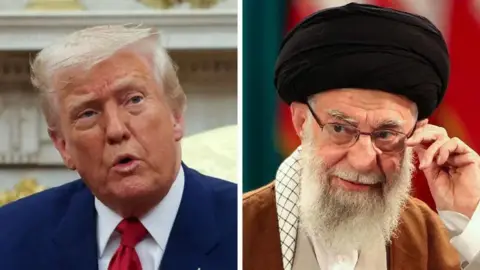
First, decoupling maritime security from nuclear issues may create a false sense of stability. A country capable of enriching uranium to 60% is already in a position to threaten regional security far beyond the strait.
Second, allies may view this as a betrayal. Israel, in particular, could respond with covert actions—such as sabotage or cyberattacks—that reignite tensions and undermine the very deal meant to prevent conflict.
Third, domestic hardliners in both countries could sabotage the process. In Iran, the Supreme Leader has consistently opposed direct negotiations with the US. In the US, Congress has historically resisted any deal perceived as appeasement.
What Should Happen Next?
The US should neither reject nor accept the proposal outright. Instead, it should respond with a counteroffer that: - Accepts the principle of securing the strait - Insists on a firm timeline for resuming nuclear talks (e.g., within six months) - Links partial sanctions relief to verifiable compliance on both fronts
Simultaneously, Washington should consult closely with Gulf allies and Israel, sharing intelligence and contingency plans. Multilateral involvement—even symbolic—can increase the deal’s durability.
Behind the scenes, backchannel diplomacy should continue, focusing not just on technical compliance but on underlying security concerns: Iran’s missile program, regional proxies, and US military presence.
This isn’t about salvaging the old JCPOA. It’s about crafting a new framework—one that acknowledges today’s realities: a more capable Iran, a multipolar Middle East, and a US with competing global priorities.
Closing: A Calculated Opening, Not a Solution
Iran’s offer to reopen the Strait of Hormuz while delaying nuclear talks is a maneuver, not a breakthrough. It reflects Tehran’s ability to exploit divisions and control the diplomatic tempo. But it also reveals an opening—one that the US can use to stabilize a critical waterway without surrendering leverage.
The path forward isn’t all-or-nothing. It’s iterative: small agreements with clear terms, mutual accountability, and a vision for long-term de-escalation. The strait may be narrow, but the choices ahead are vast.
Act now: Diplomats should treat this offer as a trial run for trust. Set measurable goals, involve regional stakeholders, and keep the pressure on for transparency. The world can’t afford another crisis at the world’s most critical maritime chokepoint.
FAQ
What did Iran propose to the US regarding the Strait of Hormuz? Iran offered a security deal to ensure the free passage of ships through the Strait of Hormuz, while suggesting a temporary delay in resuming nuclear negotiations.
Why would the US consider reopening talks with Iran on the strait? Securing the strait protects global oil flows, reduces military risks, and could open channels for broader regional diplomacy.
What are the risks of postponing nuclear talks? Delaying negotiations allows Iran to further advance its nuclear program, potentially bringing it closer to weapon capability without constraints.
How might Gulf allies react to this proposal? Saudi Arabia and the UAE may be cautious but pragmatic; Israel is likely to oppose any deal that eases pressure on Iran’s nuclear ambitions.
Can limited deals lead to full diplomatic normalization? They can, but only if accompanied by verification, incremental trust-building, and alignment among regional and global powers.
Has Iran previously threatened the Strait of Hormuz? Yes—during heightened tensions in 2019 and 2021, Iran seized tankers and conducted military drills near the strait, raising fears of closure.
What role could China play in this proposal? China, as a major oil importer and emerging mediator, may support de-escalation to ensure energy security and expand its diplomatic influence.
FAQ
What should you look for in Iran Offers US Deal to Reopen Strait, Delay Nuclear Talks? Focus on relevance, practical value, and how well the solution matches real user intent.
Is Iran Offers US Deal to Reopen Strait, Delay Nuclear Talks suitable for beginners? That depends on the workflow, but a clear step-by-step approach usually makes it easier to start.
How do you compare options around Iran Offers US Deal to Reopen Strait, Delay Nuclear Talks? Compare features, trust signals, limitations, pricing, and ease of implementation.
What mistakes should you avoid? Avoid generic choices, weak validation, and decisions based only on marketing claims.
What is the next best step? Shortlist the most relevant options, validate them quickly, and refine from real-world results.